Which country is better For Indians to settle in Canada or Australia?
If you dream of settling abroad and are confused about which is better Australia or Canada choosing either Canada or Australia, this blog will clear all your doubts.
Whenever someone thinks of migrating to another country, the first thought that comes to mind is how will I settle there? Will that country be as friendly and supportive as ours?
Being Indian, we understand your attachment to your community, friends, family, and budget. And moving abroad to pursue your dreams is a big decision in your life.
Think of moving abroad as a job, no matter how great the package and system are. A good company has an environment that makes you want to stay.
So today, we will talk about two big countries that are Canada and Australia which are the top destinations for migrants globally. And also the one which is a priority for most of the Indians.
Canada and Australia both are the top countries in the world. They are well-known for their education, sports, healthcare system, salaries, career opportunities, better lifestyle, and more.
But still, both have economic and cultural differences that make them different.

Pros of Living in Canada
Universal healthcare: Canada provides free healthcare to all residents, ensuring that everyone has access to essential medical services without financial burden.
Safe and secure: Canada boasts low crime rates and a strong sense of community, creating a peaceful and secure environment for individuals and families.
Access to education: Canada's world-class education system offers free public schooling and accessible higher education, empowering residents to pursue their educational goals which can be a good thing for students.
Cons of Living in Canada
Harsh winters: Winters can be long and cold, with temperatures dropping well below freezing.
Long wait times for healthcare: While there is a universal healthcare system, wait times for elective procedures and non-emergency care can be long.
Remote areas with limited amenities: Some areas have limited access to amenities and services.
Pros of Living in Australia
Australia is also a good place to live with amazing beaches, exciting cities, and animals you won't find anywhere else. It's a place of many chances for people who want to move there. Its sunny climate, with mild winters and long, warm summers, invites an outdoor lifestyle filled with exciting activities.
From exploring the Great Barrier Reef to marvelling at Uluru, Australia's natural wonders are a paradise for nature lovers.
Aussies are known for their laid-back lifestyle and friendly nature. Their multicultural cities, like Sydney and Melbourne, are hubs of arts, culture, diverse cuisine, and buzzing nightlife. Australians also prioritize work-life balance, enjoying shorter working hours and plenty of leisure time.
So, if you're seeking an exceptional quality of life, enveloped by captivating natural beauty, a harmonious blend of cultures, and a pervasive sense of tranquillity, Australia welcomes you with open arms.
Cons of Living in Australia
High cost of living: Australia is one of the most expensive countries in the world to live in, especially in major cities like Sydney and Melbourne. Housing, food, transportation, and other goods and services can be significantly higher than in other developed countries.
Harsh weather conditions: Australia's climate varies widely across its vast territory. In the north, summers are hot and humid, and there is a risk of cyclones and floods. In the south, winters are cold and wet, and there is a danger of heatwaves and bushfires.
Distance from family and friends: Australia's geographical isolation can make it difficult to maintain close ties with family and friends overseas. This can be especially challenging for new immigrants who may not have a strong support network in the country.
What is the average cost of Canadian and Australian PR cards?
Australia - Base application charge- AUD 4,115 (Sub-Class 190/ 189, Sub-Class 489/491 )
Canada - CAD 1,325 (Express Entry).
NOTE:
Change in application fee is subject to the immigration programs of each country.
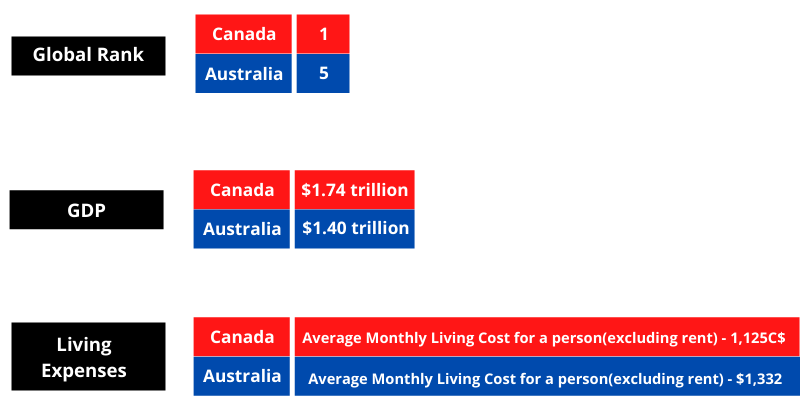
Canada has a strong economy with a GDP of $1.74 trillion. And a population of 37,593,384 people. Besides economic power, Canada has a strong community that openly accepts every nationality and religious belief.
Canada has universal healthcare, top research universities, good salaries, free education for children, and many more facilities that welcome more and more immigrants to the country.
Australia or Canada which is Better for Indian
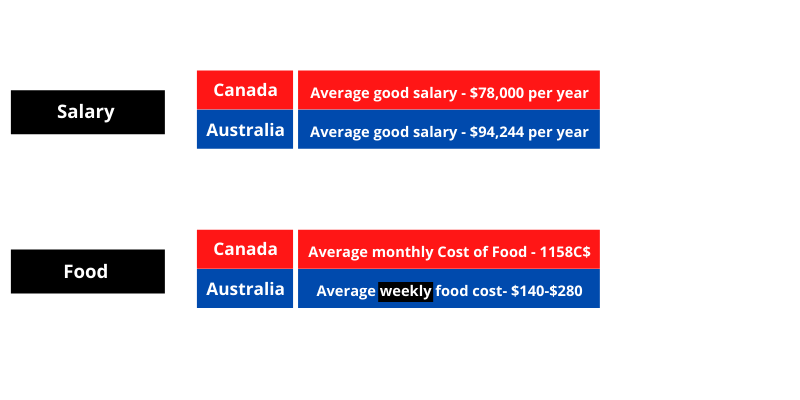
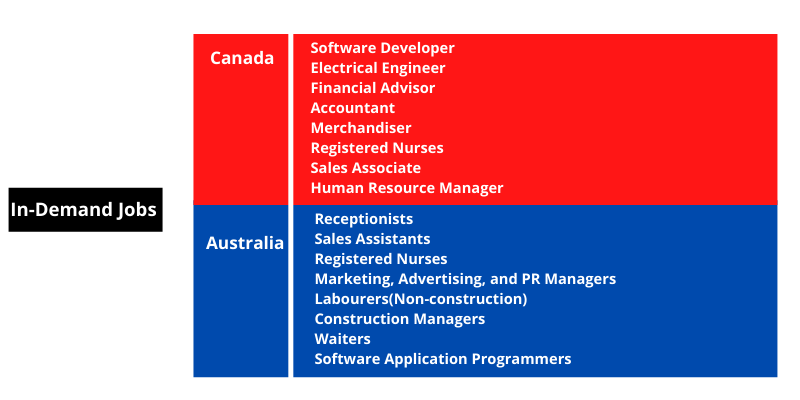
Here, we shared some statistics that support each country individually, from food to transportation to education to rent and their economy, the facts about both countries.
So, it depends entirely on your goals and preferences, what your purpose is, and what kind of environment you prefer to live in, But always remember, don't make your decisions on your short-term goals because the money and time you will spend in a country is going to impact you in the longer run.
FAQ
1. How Many Indians are Living in Canada
As of 2023, approximately 1.8 million people of Indian origin reside in Canada, constituting 4.7% of the country's population.
2. Living Cost in Australia
The cost of living in Australia is generally high, but there are ways to save money by living in a cheaper city, sharing accommodation, cooking at home, using public transportation, and finding deals.
3. Living Cost in Canada
The average monthly living cost in Canada for a single person is CAD 1,003.6 without rent, and CAD 3,586.9 for a family of four without rent.
4. Canada Minimum Salary Per Year
The minimum wage in Canada varies by province and territory but ranges from $29,120 to $34,881.60 per year.
5. Australia Minimum Salary Per Year
The current minimum wage in Australia is $23.23 per hour or $882.80 per week, which equates to $45,905.60 per year.
Still, have questions?
No worries. Get on a quick call and get answers to all your questions.
Comments